

Choosing the best AI agent platform for your enterprise can feel like playing spot the difference. At first glance, every vendor looks almost the same. They all promise to help you build agents, connect tools, and get them into production.
VentureBeat recently compared xpander against LangChain, CrewAI, Temporal, and AWS AgentCore. Here, we expand that comparison to seven enterprise platforms. We also cover the no-code builders that appear in most searches on this topic.
We group these products by the problem each one solves: developer frameworks, durable execution, managed cloud runtimes, no-code building, and the enterprise agent platform. They compete for the same budget, but they aren’t the same type of product. Only one category offers a complete platform for building, running, connecting, and governing agents across a company.
By the end, you’ll have a clearer way to compare the market, narrow your shortlist, and choose the platform that matches where your team is today.
Four types of AI agent platforms and what they’re good for
These seven platforms come from four different starting points:
Developer frameworks (LangChain, CrewAI): help software engineering teams go from idea to working agent quickly, but often leave production deployment, governance, and delivery to you.
Durable execution (Temporal): keeps long-running workflows from failing halfway through, but doesn’t manage identity or policy.
Managed cloud runtimes (AWS, Google, Microsoft): give teams a managed runtime if they’ve already chosen a cloud provider.
The enterprise AI agent platform (xpander): one platform where companies build, run, connect, and govern agents across teams, frameworks, models, and clouds, with the employee-facing experience included, not assembled.
VentureBeat groups xpander with agent development frameworks and runtimes such as LangChain, CrewAI, and Temporal. These categories are increasingly converging around a new layer: the agent harness. This is the execution infrastructure around the model that determines how an agent operates.
It helps to keep three ideas straight as you read:
A framework is how you build an agent.
The execution layer is how it runs: tools, context, memory, recovery.
Governance is how an enterprise controls many agents at once: identity, permissions, audit, and spend.
Every vendor below is strong at one or two of those. The comparison is about which ones, and what’s left for you.
AI agent platforms compared at a glance
Platform | Category | Best for | Governance and audit | Lock-in | Pricing model |
|---|---|---|---|---|---|
xpander | Enterprise agent platform | Building, running, and governing agents for the whole company, across frameworks, models, and clouds | Identity, audit trail, human-in-the-loop approvals, credential vault, budgets | None claimed, agnostic, self-hosted option | Usage-based credits (cloud) or annual enterprise license (self-hosted) |
LangChain / LangSmith | Developer framework | Building and iterating on agent logic fast | LangSmith adds tracing and evaluation, not full governance | Low for LangChain; LangSmith leans you into the ecosystem | Open source; LangSmith adds per-seat paid tiers |
CrewAI | Developer framework | Fast multi-agent prototypes | Minimal in the OSS core; Enterprise adds a control plane | Framework-specific format | Free OSS; Enterprise custom |
Temporal | Durable execution | Long-running, multi-step workflows | Execution reliability, not identity or policy | Requires Temporal server or Cloud | OSS core; Cloud usage-based |
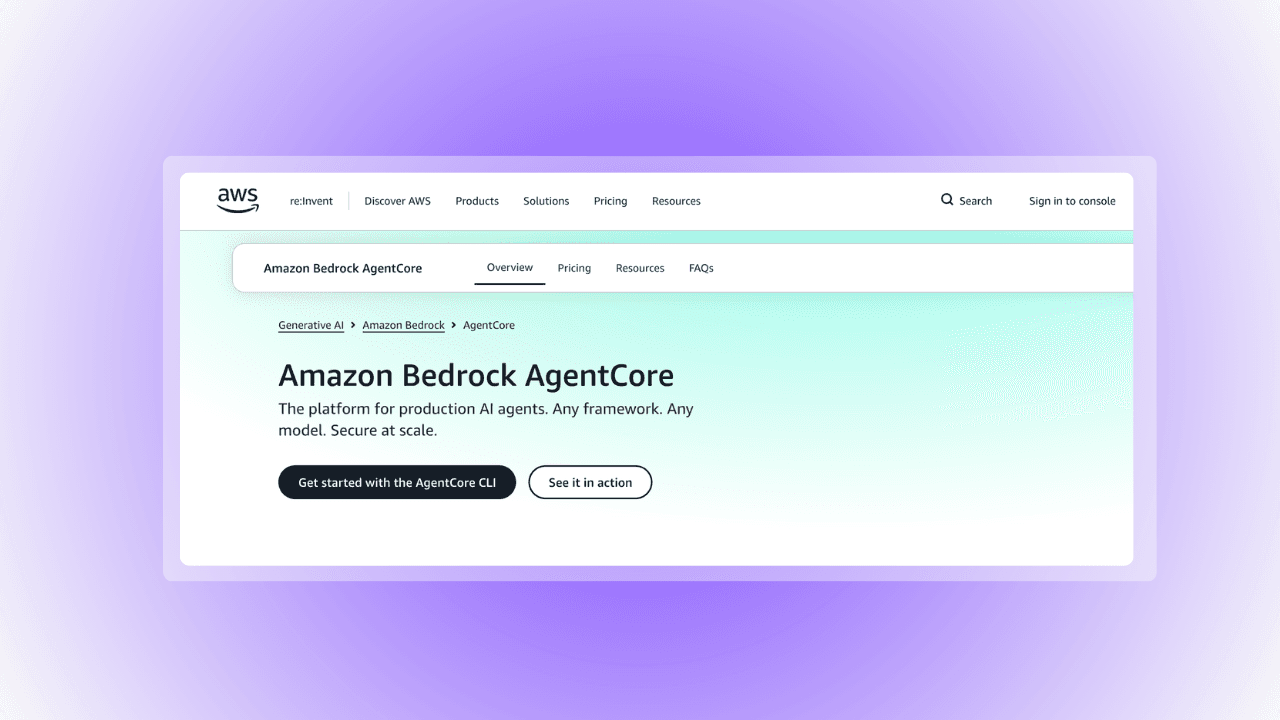
AWS Bedrock AgentCore | Managed cloud runtime | Teams already on AWS that want a managed runtime | CloudWatch observability, identity via Gateway | AWS | Consumption-based, per component |
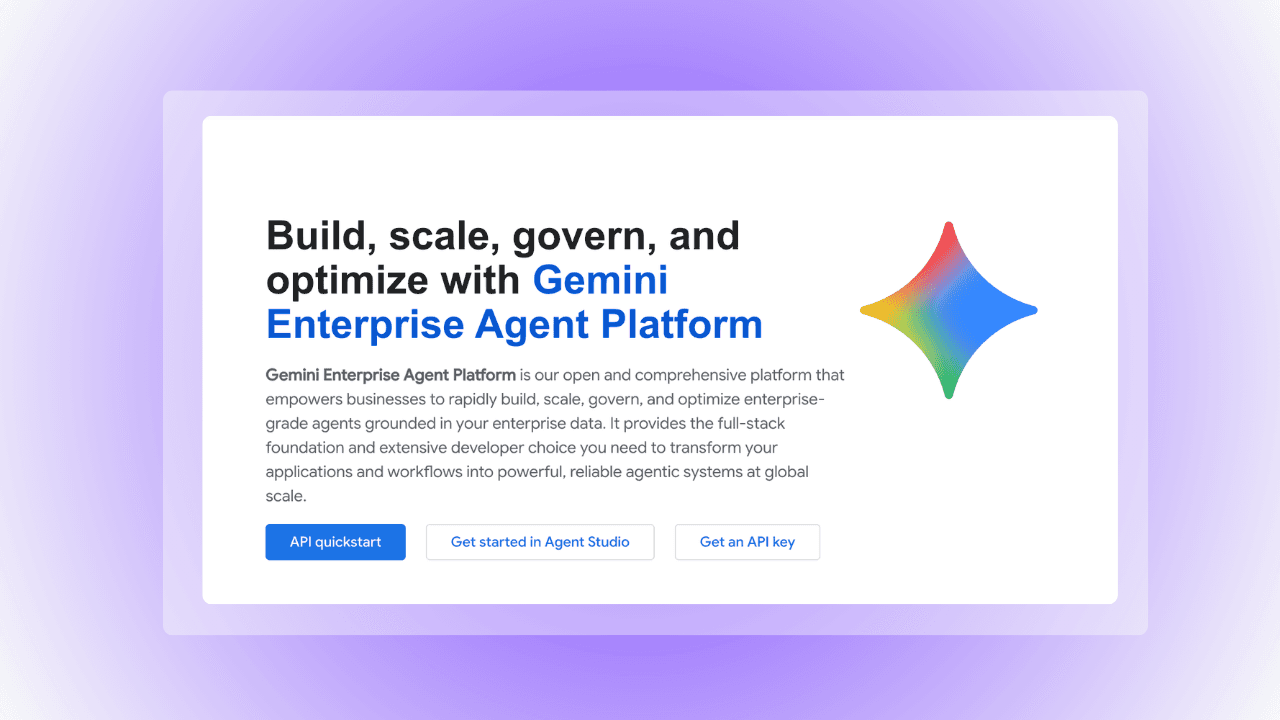
Gemini Enterprise Agent Platform | Managed cloud runtime | Google Cloud, Workspace-first organizations | Model registry, monitoring, agent registration | Google Cloud | Per-seat tiers |
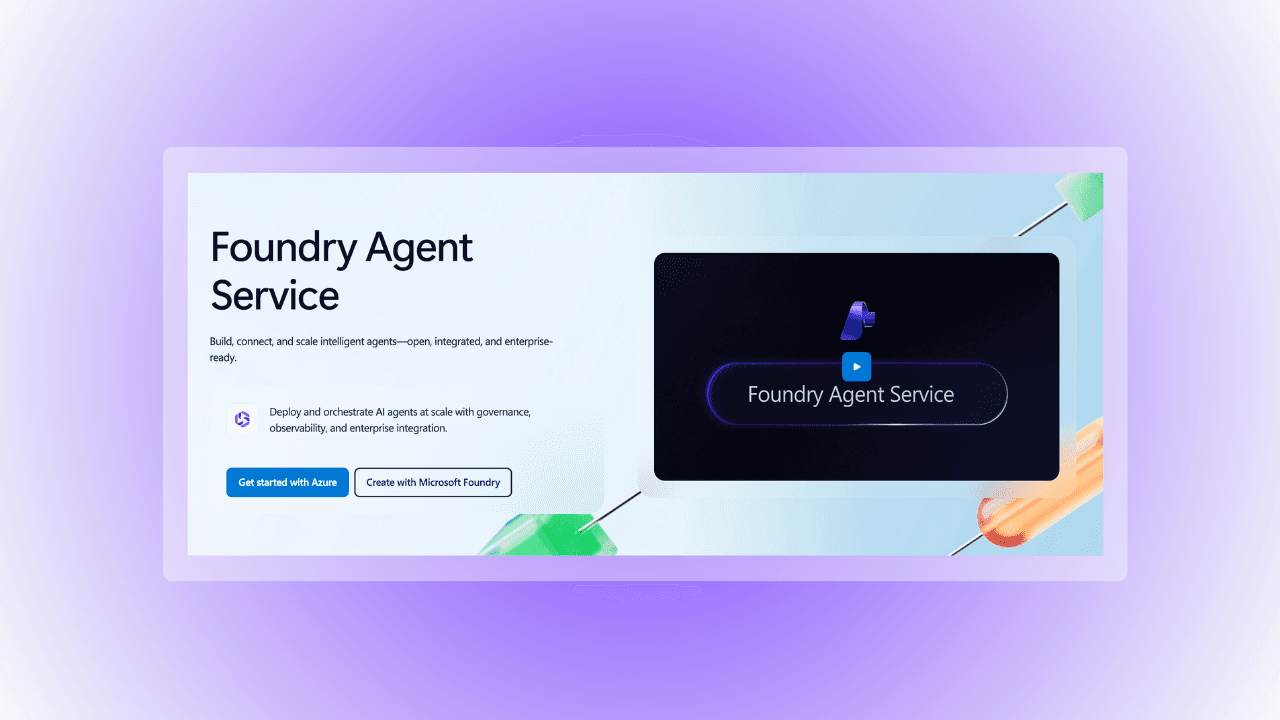
Microsoft Foundry Agent Service | Managed cloud runtime | Microsoft 365 and Entra-native organizations | Entra Agent ID, guardrails, tenant-wide policy | Azure, though it supports LangGraph | Consumption-based |
The best AI agent platform for enterprises
The enterprise agent platform
xpander
*A quick disclosure before we get to our own listing: this article is published by xpander, so weigh this section accordingly. The other six are covered on their own terms.*
Most platforms on this list ask you to pick a side, such as a specific framework like LangChain, a cloud provider like AWS, or a durable engine like Temporal. xpander starts from a different premise: enterprises need one platform where the whole company can build, run, and use AI agents, with governance across every framework, model, and cloud.
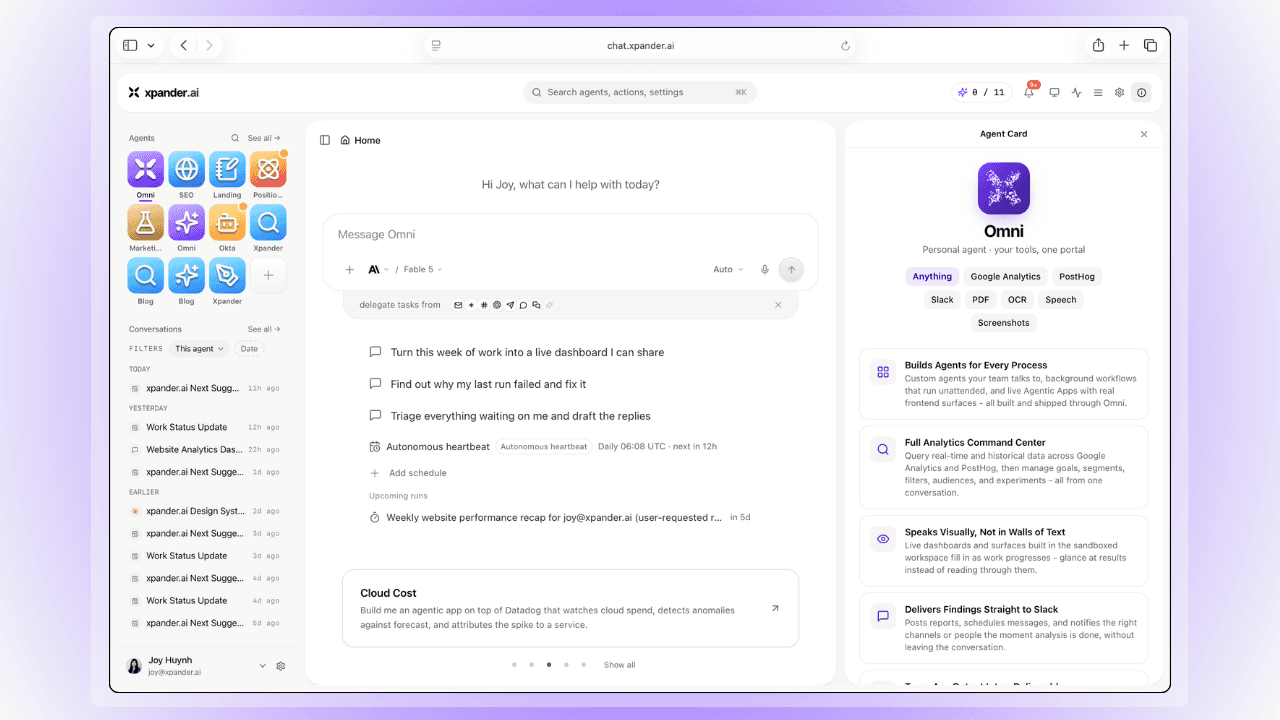
How enterprise teams use xpander to become AI-native:
Move local desktop agents to a governed environment. Teams are already building and running agents in tools like Claude and Codex, but those agents live only on a laptop. They’re invisible to IT and disappear when the laptop shuts down. CIOs and CISOs are left asking the same questions: What agents are running? Who owns them? What data can they access? How do we stop one if something goes wrong? xpander brings those agents into one governed environment without taking away the tools people already use.
Let every business team build and run agents, not just engineering. Omni, the AI engineer built into the platform, turns a plain-language description into a working agent for any team. Ask for an agent, and Omni sets it up in a few clicks. It requires no infrastructure or setup project. Omni tests the agent on mock data before it touches live systems, then keeps it optimized as it runs.
Either way, xpander doesn’t ask teams to abandon what they’ve already built. You can bring agents and skills built in Claude, as well as agents written in LangChain, Strands, or Agno. Run them on xpander’s cloud or in your own environment, with your prompts, rules, and skills intact. Everything is integrated and governed through one platform.
xpander platform capabilities:
Build AI agents: Omni turns a plain-language description into a working agent, tested on mock data before it touches live systems, then flipped live. Developers get the same power through a code-first SDK and API, and agents already built in a framework like LangChain, Strands, or Agno plug in the same way. Working agents ship in days, not quarters, because the infrastructure underneath is already built.
Run and optimize AI agents: agents handle multi-turn, long-horizon work that finishes the job, each in an isolated environment with memory across runs and any model provider behind one gateway. Swap the model and the agent’s logic stays untouched; compare cost and quality across models on the same agent and keep the winner.
Connect agents to your business systems: agents authenticate as the person who invoked them, through your identity provider, so every action respects that person’s existing permissions across ticketing, data platforms, cloud accounts, and other enterprise systems. Deployment runs where your data lives: xpander’s cloud, your VPC, on premises, or fully air-gapped.
Multiplayer: human and AI agent collaboration: one team builds an agent, and the whole company uses it. The same governed agent answers in Slack, Microsoft Teams, ChatGPT, Claude, email, or a custom web app, people and agents share one thread, and teams get live dashboards that stay current instead of chat transcripts.
Control and govern AI agents: every agent has a named identity and every action ties back to a specific human. Every tool call is logged, risky actions pause for in-thread approval, credentials are injected from a vault at tool-call runtime so the model never sees a secret, and budgets cap spend per task, per agent, and per team.
Best for: enterprises that want agents built and used across the whole company, not just engineering, with one clear way to run, govern, and budget all of it, including the agents different teams already built in different tools.
Pricing model: usage-based credits on the hosted cloud, with unlimited seats, so cost scales with what agents do rather than with headcount. Self-hosted deployments run on an annual enterprise license rather than a per-seat charge.
Example of when a team is best served by xpander: A midsize insurer discovers that it already has several agents: a claims summarizer built in a desktop AI tool, a LangChain pilot from the data team, and a support bot from a vendor. Security wants clear answers to three questions: “What’s running? Who owns it? What can it access?” Meanwhile, the claims team is asking for five more agents this quarter. Rebuilding everything on one framework isn’t realistic, and neither is spending a year on platform engineering. The best fit is one platform that runs what already exists, lets every team build what’s next, and keeps it all governed.
Developer frameworks
Frameworks are where most agent journeys start, and for good reason. They’re the fastest path from an idea to working agent logic. The tradeoff is that you must assemble most production capabilities, including identity, audit, approvals, and cross-team governance. Both vendors in this section are building platform layers around their frameworks. This approach works well if you standardize on one ecosystem, but less well if different teams use different frameworks.
LangChain / LangSmith
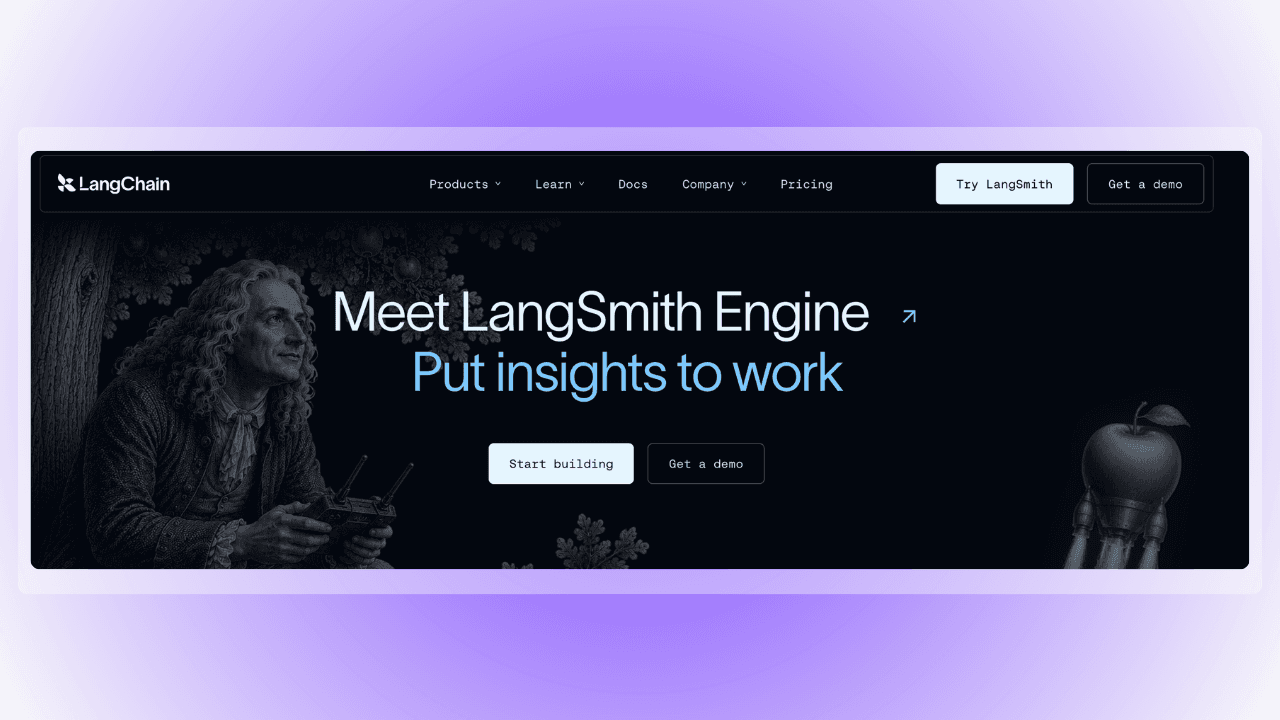
LangChain is a free, open-source framework (MIT-licensed) for building AI agents, with pre-built agent architectures based on the ReAct pattern and more than 1,000 integrations across models, tools, and databases. It’s built on LangGraph’s durable runtime, so agents get persistence and checkpointing without you writing that logic yourself. LangSmith is the companion platform for debugging, evaluating, and deploying whatever you build on it.
Key features:
Pre-built ReAct-pattern agent architectures, customizable through middleware without rewriting core logic
Over 1,000 integrations across models, vector stores, and tools
Built-in persistence and checkpointing via LangGraph, so long-running agents can resume state
LangSmith observability: trace every agent decision, then score and evaluate changes before shipping
An LLM gateway for controlling and routing model calls, plus sandboxes for running agent-generated code safely
Fleet management for tracking agents across an organization, not just one project
Best for: engineering teams building new agent capability from scratch who are comfortable owning governance themselves.
Pricing model: the LangChain framework is free and open source. LangSmith adds per-seat paid tiers on top, so platform cost scales with the number of builders.
What you’d still build: LangSmith gives you observability, not governance. It traces and evaluates agent behavior, but you’d still build identity tied to a specific human, approval gates, a durable audit trail, and any way to govern agents another team builds on a different framework.
Example of when a team is best served by Langchain: A fintech’s ML team is building a new underwriting agent with custom retrieval and evaluation logic. The team wants full control of every step, has platform engineers who can own the production wrapper, and plans to keep everything in one codebase. A framework is the right tool for this job. If the team has chosen the LangChain suite, deploying through LangSmith could be a good option, although it would still require platform scaffolding.
CrewAI
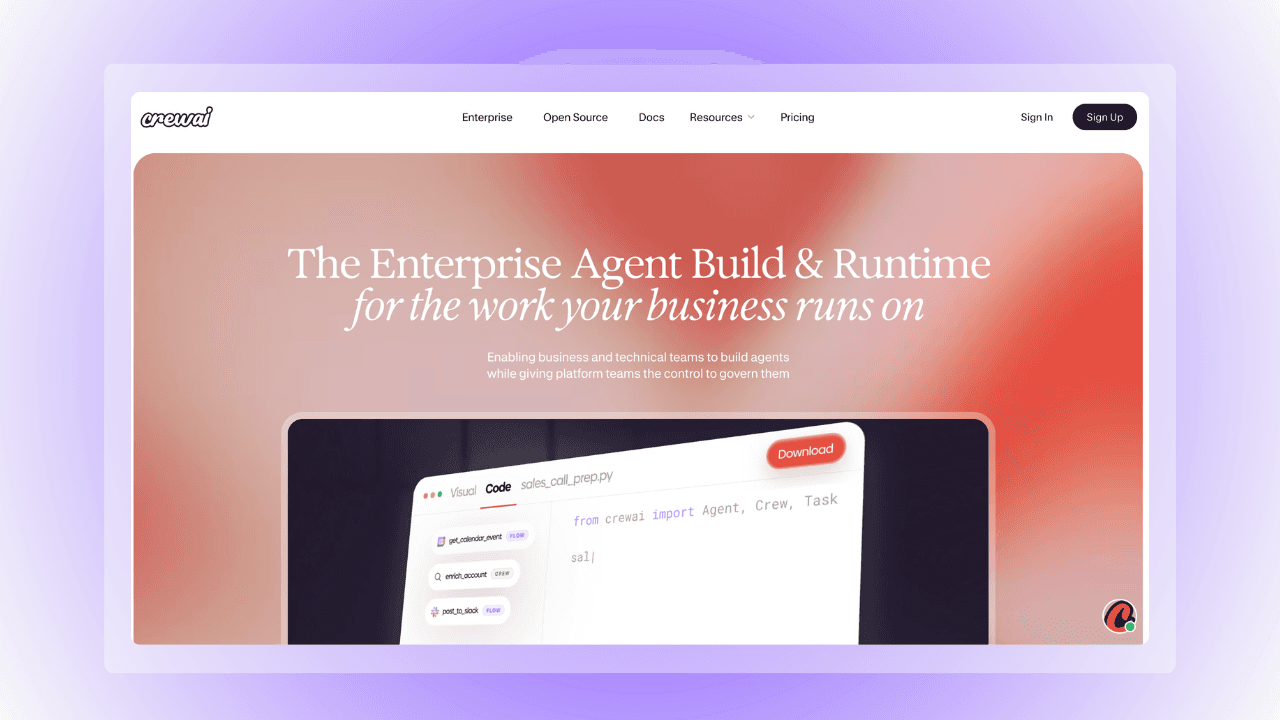
CrewAI started as an open-source framework for role-based multi-agent orchestration: you assign each agent a role, a goal, and a set of tools, then let them collaborate on a task. It has since added an enterprise platform layer, organized around four stages Crew calls Discovery, Build, Govern, and Optimize, aimed at giving platform teams central control over agents that business teams build.
Key features:
Role-based multi-agent orchestration for coordinating several agents on one task
Discovery: scans historical agent runs, tickets, and workflows to surface automation opportunities, ranked by effort and expected value
A no-code visual editor alongside a code-first API, so both business and engineering teams can build
A control plane (Enterprise tier) with real-time LLM tracing, role-based access control, audit trails, and human-in-the-loop approval gates
Optimize: uses production data to retrain agents and improve accuracy over time
Best for: hackathons, proofs of concept, and validating a multi-agent idea fast, with the Enterprise tier aimed at platform teams that need governance layered on top.
Pricing model: the open-source framework is free on GitHub. The cloud Basic plan is free with 50 workflow executions a month; Enterprise is custom-quoted.
What you’d still build: the open-source core has minimal governance built in. Enterprise closes some of that gap, but getting it means adopting CrewAI’s own control plane and deployment model, and it governs what’s built in CrewAI, not the agents your other teams built elsewhere.
Example of when a team is best served by CrewAI: An innovation team has two weeks to prove that a research-and-summarize workflow is worth automating. Role-based crews help the team produce a convincing demo quickly, and no one is asking about audit trails yet. That’s exactly where CrewAI shines.
Durable execution
Temporal
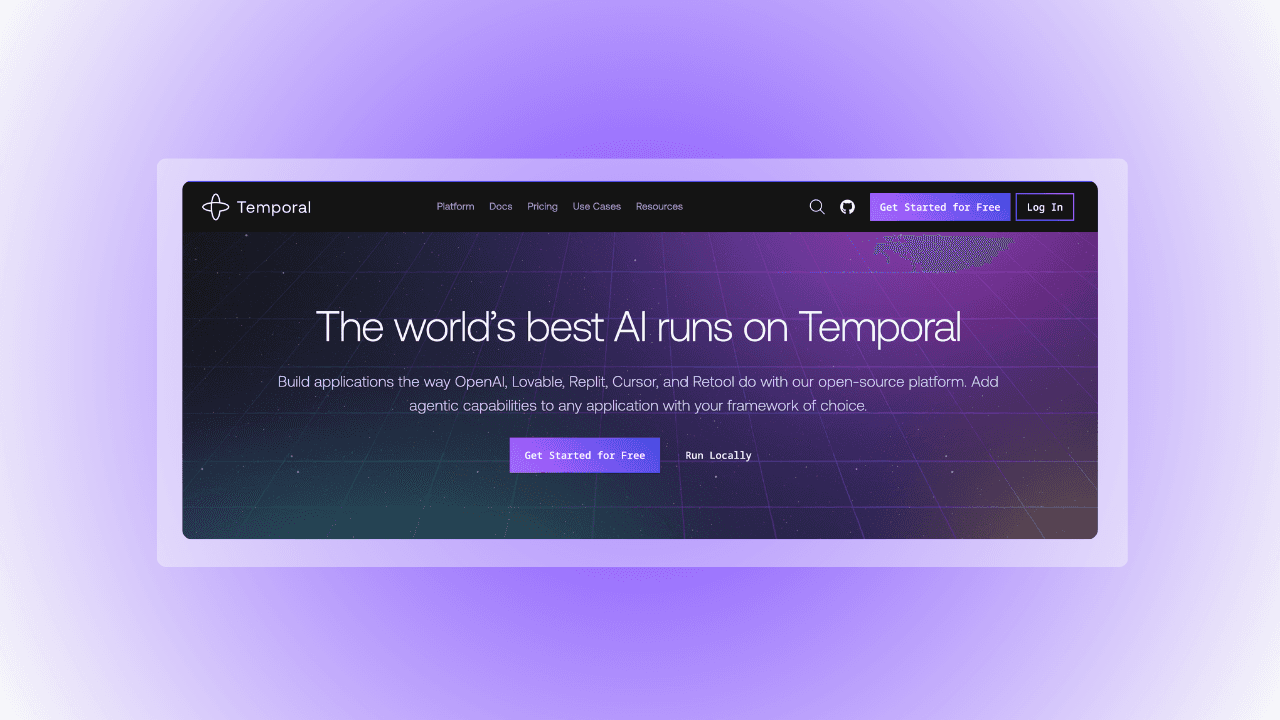
Temporal is an open-source durable execution platform, not an agent framework. It solves a narrower, load-bearing problem: keeping a long-running, multi-step process alive through crashes, timeouts, and failures, then resuming exactly where it left off instead of starting over.
Key features:
Workflows: your business logic (a payment, an order, a multi-day agent task) written as ordinary code
Activities: the failure-prone parts, like API calls, get automatic retries without you writing that logic
State capture at every step, so a crash mid-workflow doesn’t mean starting from scratch
Full visibility into a workflow’s exact state, without digging through logs to reconstruct what happened
Native SDKs across multiple programming languages
Temporal Cloud, a managed option, publishes a 99.9999% trailing 30-day uptime figure
Best for: platform or infrastructure teams whose agent workflows run over hours or days and can’t afford to fail silently partway through.
Pricing model: the core is open source and self-hosted (MIT-licensed). Temporal Cloud is a managed, usage-based option.
What you’d still build: Temporal has no opinion on identity, audit, or policy. It keeps a workflow alive; it doesn’t tell you who approved what an agent did inside that workflow. Everything about permissions, secrets, and human oversight is yours to design on top.
Example of when a team is best served by Temporal: A logistics company runs an agent workflow that reconciles shipments across three systems over 36 hours. If step 14 of 20 fails at 3 a.m., the workflow must resume rather than restart. This is a difficult reliability problem, and it’s exactly what Temporal is designed to solve.
Managed cloud runtimes
All three hyperscalers now sell a managed agent runtime. The basic offer is similar: if you’ve already committed to a cloud provider, you get scaling, isolation, and managed infrastructure. In return, your agent stack lives within that cloud. The main differences are how much governance comes built in, how much you must assemble, and which identity system the agents use.
AWS Bedrock AgentCore
AgentCore is AWS’s answer to “build agents on whatever framework you want, without assembling your own production infrastructure.” It’s explicitly framework-agnostic, supporting LangChain, the OpenAI Agents SDK, the Claude Agent SDK, and Strands, and model-agnostic on top of that. It ships as a set of separate managed components rather than one single product.
Key features:
Gateway: connects agents to MCP servers, knowledge bases, internal APIs, and Lambda functions, and manages authentication for those tool calls
Identity and access controls enforced at the platform layer, checked with AWS’s own automated reasoning tooling
Observability into every agent step, tool call, and decision point
Support for testing agent variations against real traffic before committing to a change
Built to align with AWS’s existing compliance programs
Best for: AWS-committed platform teams that want framework flexibility and have the engineering capacity to assemble the pieces themselves.
Pricing model: consumption-based, priced per component, with a separate pricing page for each AgentCore service.
What you’d still build: The “any framework, any model” claim is real, but you must integrate roughly half a dozen separately priced AgentCore components. AWS’s documentation also notes that the runtime provides infrastructure while developers retain their own orchestration loop. Your platform team must assemble the product within AWS, including the *experience layer* that business teams use to build and run AI agents.
An example when team is best served by AWS Bedrock AgentCore: A retailer standardized on AWS three years ago, has a strong platform engineering team, and wants agents close to its Bedrock models and existing IAM system. Assembling AgentCore components takes work, but the team already knows how to do it in a cloud environment it trusts.
Gemini Enterprise Agent Platform
Gemini Enterprise is Google Cloud’s platform for letting an entire workforce, not just engineers, discover, build, and run AI agents. It leans more toward a company-wide agent workspace than a developer framework, shipping with prebuilt agents and a no-code builder alongside support for custom, code-built agents.
Key features:
Prebuilt agents (Deep Research, Gemini Notebook) ready to use without building anything
A no-code agent designer, plus support for custom agents built with Google’s Agent Development Kit
Business data integration across Microsoft 365, Google Workspace, HubSpot, Jira, SharePoint, and more
Centralized admin control over connectors, permissions, and policy
Higher tiers add VPC Service Controls, customer-managed encryption keys, and HIPAA and FedRAMP High support
Best for: teams already deep in Google Cloud and Workspace who want agent building available to non-engineers across the company.
Pricing model: per-seat tiers (Business at \$21 per seat per month for up to 300 seats; Standard and Plus from \$30 per seat), so cost scales with how many people you enable.
What you’d still build: You would build less than you would with AgentCore. However, key governance features, including VPC Service Controls, customer-managed keys, and custom agents, sit behind higher-priced tiers. The deeper you go, the more your workflow depends on Google Cloud.
An example when a team is best served by Gemini Enterprise Agent Platform: A Google Workspace and Google Cloud-native company wants every department to try prebuilt research agents this quarter, with IT maintaining central control. If the organization already uses Google’s identity and data stack, this is the shortest path to broad, managed adoption.
Microsoft Foundry Agent Service
Foundry Agent Service, formerly branded Azure AI Foundry Agent Service, is Microsoft’s managed runtime for deploying agents at enterprise scale. It’s built around open protocols so agents built elsewhere aren’t excluded, with identity handled through Entra rather than a separate system.
Key features:
One-command deployment to a session-isolated, autoscaling managed runtime with no idle cost
Support for MCP, A2A, and OpenAPI, so agents built on other open standards aren’t locked out
Built-in short-term, long-term, and procedural memory, managed for you
A toolbox for curating reusable tools with centralized authentication and versioning
Entra Agent ID, giving each agent a real, first-class identity with its own access controls
One-click publishing into Microsoft Teams and Microsoft 365 Copilot
Best for: organizations already standardized on Microsoft 365 and Entra, where agent identity needs to plug into the same identity system as everything else.
Pricing model: consumption-based, tied to the specific models and tools an agent actually uses.
What you’d still build: the open-standards support is real, but the identity and policy model is Entra-native, so the deepest governance value shows up specifically inside a Microsoft-centric environment. Cross-cloud agents are possible; cross-cloud governance isn’t the design center.
An example when a team is best served by Microsoft Foundry Agent Service: A manufacturer runs everything through Microsoft 365, and the security team’s first question about any agent is, “Does it have an Entra identity?” For that organization, the main benefit is having agents and employees in the same identity system.
How to choose the right enterprise AI agent platform
The right platform depends entirely on which problem you actually have:
No agents in production yet, and want to build agents for your product? Your problem is building agent logic. Start with a framework like LangChain or CrewAI, not a governance platform.
Agents keep failing partway through long workflows? Your problem is durability. Temporal-level reliability matters most here, and it is designed for software developers.
Already picked a cloud and want managed infrastructure? That’s an infrastructure decision. Hyperscaler runtimes can work, with cloud lock-in as the tradeoff. You’ll also need a strong platform engineering team to bring AI to the organization, which can become a long and expensive project.
Want every team to use agents without building the experience layer yourself? That’s a platform decision. Assembling channels, shared workspaces, dashboards, approvals, and budgets from separate parts creates the long project described above. Most products on this list leave that work to you.
Already have agents built by different teams on different frameworks, but no one knows what’s live or who approved it? That’s an organizational problem, not just a technology problem. Most products on this list don’t solve it.
Five questions that apply no matter which direction you’re evaluating:
Can you name every agent currently running and who owns it?
Can you trace any specific action back to the human who approved it?
Does adding a new framework or model require rebuilding anything?
What happens when an agent fails halfway through a multi-step task?
Can a business team go from request to a working, governed agent without opening a platform project?
If you can’t answer all five today, close those gaps before comparing feature lists. That’s where xpander fits and where the VentureBeat comparison placed it: *on top of what you’ve already built, without asking you to rebuild on someone else’s terms*.
Before you create a shortlist, compare the pricing models. Per-seat platforms scale costs with the number of users, which can discourage company-wide adoption. Usage-based platforms scale costs with what agents do. Neither model is inherently wrong, but each one creates different incentives. For a company-wide rollout, the difference can grow quickly.
What about platform for no-code builders?
We don’t cover Relevance AI, n8n, StackAI, Botpress, and similar builders in depth here. They solve a real problem, but not the one at the center of this comparison. Here’s what each one does and why it’s out of scope.
Relevance AI is a no-code platform for building AI agents and multi-step workflows through a visual canvas, aimed at ops and marketing teams who want to automate tasks without writing code.
n8n is an open-source, node-based workflow automation tool that added AI agent nodes on top of an already large library of app integrations, popular with technical teams that were already using it for automation before agents entered the picture.
StackAI is a no-code builder for assembling and deploying AI agents and chatbots for internal or customer-facing use, with prebuilt templates aimed at common enterprise use cases.
Botpress is an open-source builder for conversational assistants and chatbots, strong for support bots that non-technical team members manage day to day. It isn’t a governance platform for agents built elsewhere, which is what this comparison is about.
What they’re good at: letting someone assemble a working agent or workflow fast, without engineering, usually by wiring existing SaaS tools together with an LLM step. For a single team automating a single process, that’s often the fastest path to something useful.
What they don’t solve: governance, durability, or cross-framework operations once that output is running in production. None of the four above were built to answer “who approved this agent” or “what happens when it fails halfway through a multi-step task,” and none claim to.
If your marketing team needs to automate a workflow without engineering support, choose a no-code builder. If dozens of agents are running without central visibility, a shared audit trail, or clear ownership, you have a governance problem. That problem is the same regardless of which tool built each agent.
Choose the platform that matches the problem you actually have
The best enterprise AI agent platform depends on what you’re trying to fix first.
If your engineering team is still experimenting, a developer framework like LangChain or CrewAI can help you build quickly. If your agents need to survive long-running workflows, Temporal solves a real reliability problem. If your company has already standardized on AWS, Google Cloud, or Microsoft, the hyperscaler runtimes can give you a managed path forward.
But if agents are already spreading across teams, tools, and clouds, the bigger question is no longer “which framework should we use?” It’s “how does the whole company build and use these safely?”
That’s where xpander fits. It provides one platform to build, run, connect, and govern agents across frameworks, models, and environments. It covers both the underlying infrastructure and the experience your teams use, without asking anyone to rebuild existing agents or requiring a platform team to assemble the system from separate parts.
If you’re ready to put governed agents to work across your company, book a demo with xpander.
See xpander in your own environment
Talk to our team about enterprise deployment, onboarding, and support options.
Book a demo


