How to Create a KYC Compliant Agent
An AI agent that extracts identity data, screens it against sanctions lists, and generates risk assessment reports.
Connectors and tools
Google Sheets
Google Docs
Created by
xpander.ai
Built for
Enterprise engineering teams in the Finance industry
Compliance departments
Challenge
This enterprise AI agent solves the critical challenge of scaling complex compliance operations without increasing overheads. Traditional KYC processes rely on fragmented tools and manual data entry, creating bottlenecks that hinder rapid deployment and production readiness. By automating the entire workflow, this solution provides the orchestration needed to transform slow, error-prone tasks into a streamlined, autonomous process that adheres to industry best practices for risk management.
How the AI agent works
Below is how this AI agent works:
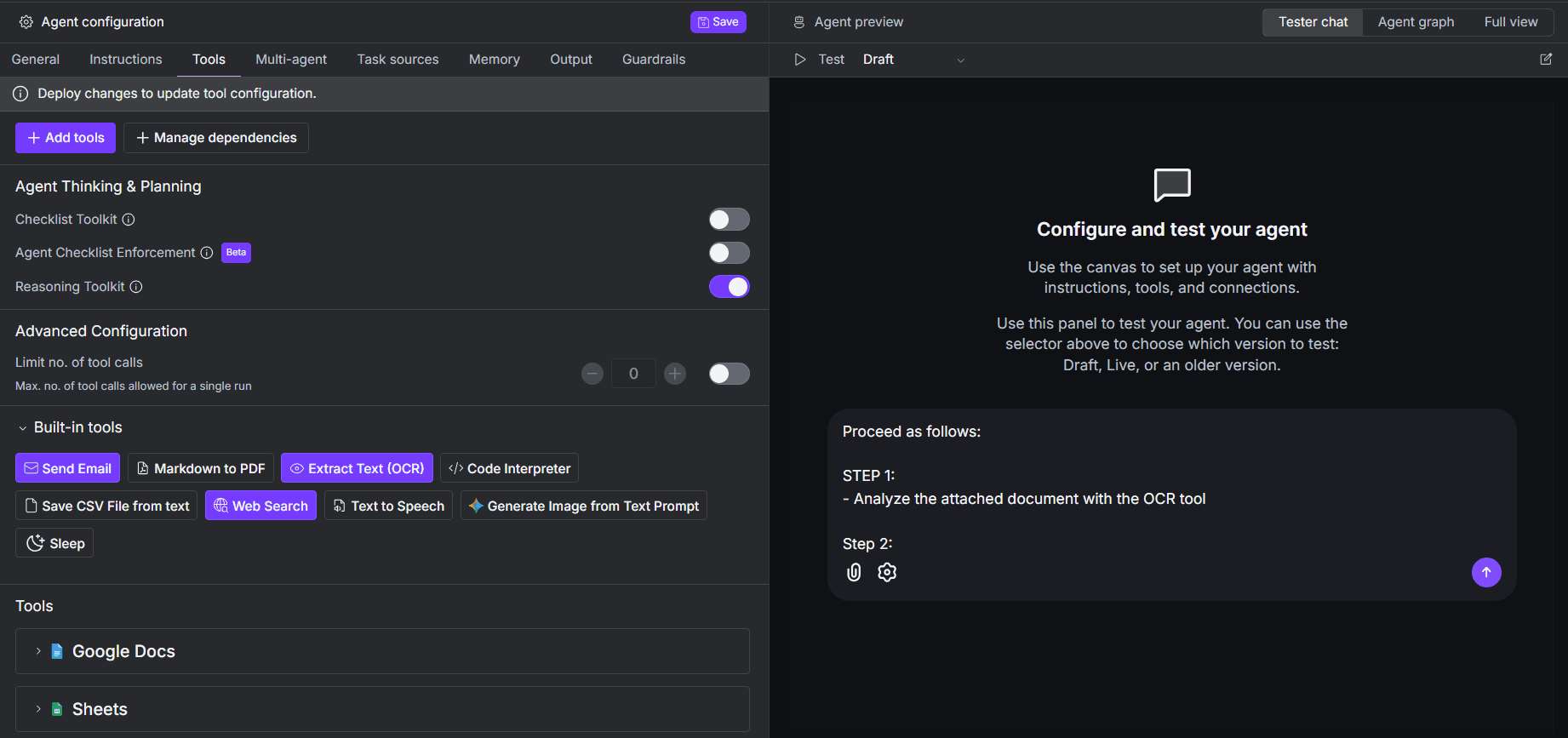
1. Document upload and processing: Users upload identity documents (passports, driver's licenses, or national IDs). The system utilizes advanced tools to ingest and process images using OCR technology, preparing raw data for the AI automation pipeline.
2. Intelligent data extraction: An autonomous model extracts key identity fields—including full name, date of birth, nationality, and address. It outputs structured JSON data, adhering to best practices for data handling and ensuring seamless downstream integration.
3. Automated record keeping: Demonstrating robust enterprise integration, extracted identity information is automatically written to a Google Sheets file, creating an auditable trail of all processed documents for better data management.
4. Sanctions and media screening: A specialized autonomous agent performs real-time web searches to check the individual against sanctions lists (OFAC, EU, UN). It identifies Politically Exposed Persons (PEP) status and surfaces adverse media, effectively automating complex background checks.
5. Comprehensive risk assessment: A compliance-focused AI analyzes all gathered information to deliver a report based on industry best practices:, Document validation status, sanctions/PEP screening results, adverse media analysis, final KYC decision (APPROVED, REVIEW_NEEDED, or REJECTED), risk score (LOW, MEDIUM, HIGH), specific flags and recommendations
6. Automated documentation: The complete risk assessment is automatically saved as a Google Docs file.. This ensures your management teams have immediate access to files named with the individual's name for easy retrieval and compliance auditing.
Key benefits
- Deploy compliance workflows in minutes, not months.
- Scale your onboarding with autonomous agents that handle volume without adding headcount.
- Ensure consistent, thorough checks that meet enterprise standards.
- Maintain complete audit trails through seamless tool integration.
Frequently Asked Questions
Expand all